In this guide
A personalized piece of jewelry is not replaced like any other. The first name is engraved, the piece is made for you, and it is kept much longer than a seasonal piece of jewelry. The material therefore matters more here than elsewhere. Here is what the three most common materials are worth.
316L Stainless Steel
This is surgical steel, the same as that used for medical instruments and certain implants. Its particularity lies in its composition: the chromium it contains forms a protective layer on the surface that regenerates itself if scratched.
Concretely, this means three things. It does not tarnish. It does not turn the skin green, because it is not a cheap alloy that oxidizes on contact with perspiration. And it withstands water: shower, pool, sea, the piece fears nothing.
Its other advantage is less visible: it is hard enough for an engraving carved into the metal to remain clear for years. On a soft metal, the edges round off and the line eventually becomes difficult to read.
Gold Plated
Gold plating is not a material, it is a finish: a layer of gold deposited on a base metal. The whole question is the thickness of this layer, and commercial vocabulary willingly maintains the blur.
A very thin gilding, a few tenths of a micron, lasts a few months on a ring worn every day, even less on a bracelet that rubs against a sleeve. A serious plating, from 2 or 3 microns, lasts much longer, but it too eventually wears out at the contact points.
This is not a defect in itself, it is a lifespan. The problem begins when it is not announced. If the thickness is not written anywhere, consider it to be thin.
925 Silver
Sterling silver is a beautiful material, warm, pleasant to engrave. It has a known flaw: it tarnishes. This is a natural reaction to sulfur present in the air, perspiration, and certain cosmetics. Nothing serious, but a silver piece of jewelry worn daily requires regular cleaning with a cloth to regain its shine.
Second point to know: silver is soft. On a thin ring or a pendant cut with a first name, it deforms more easily than steel.
What we have chosen
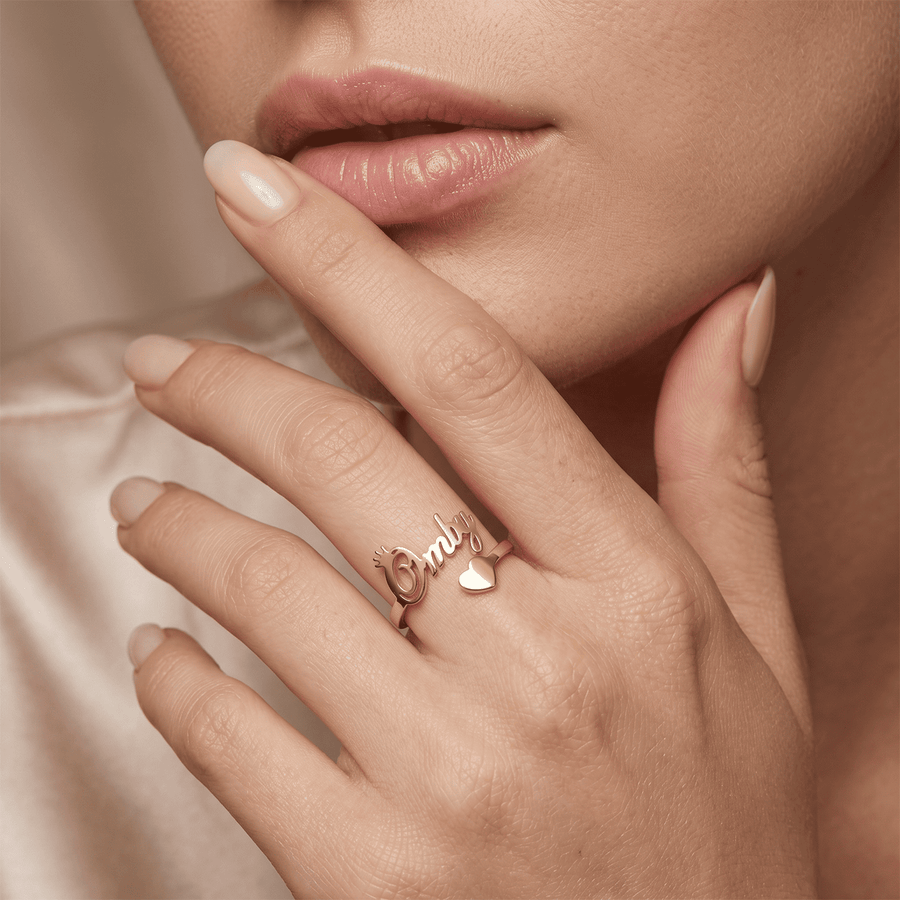
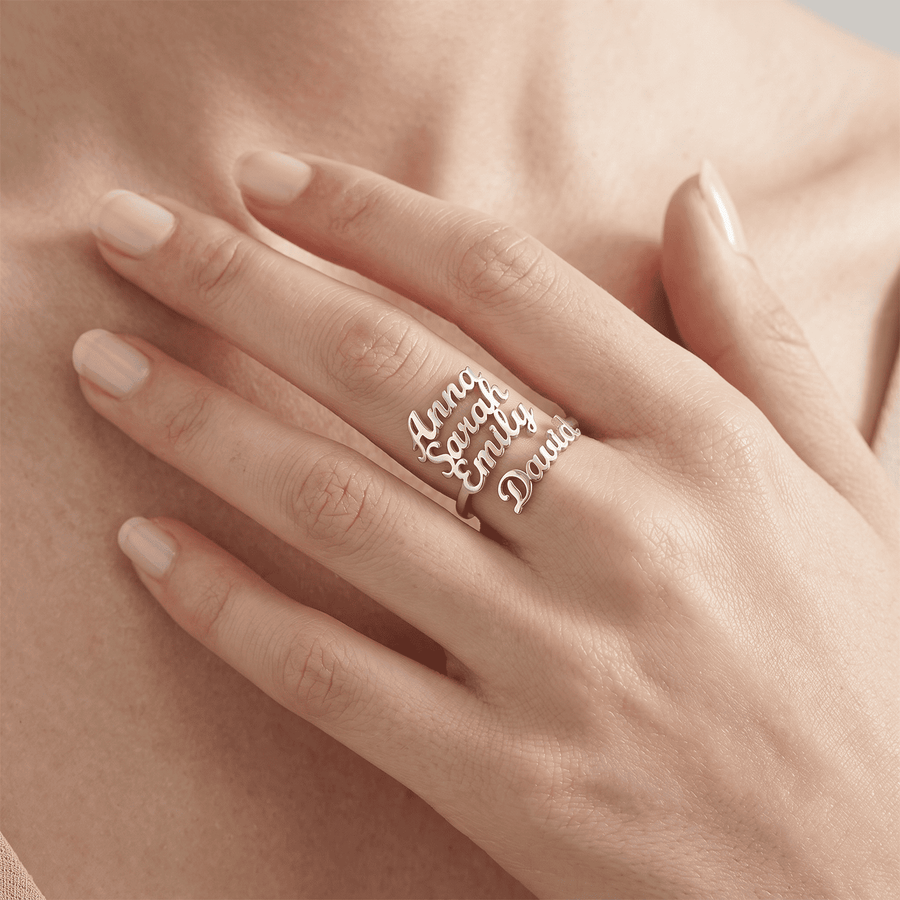
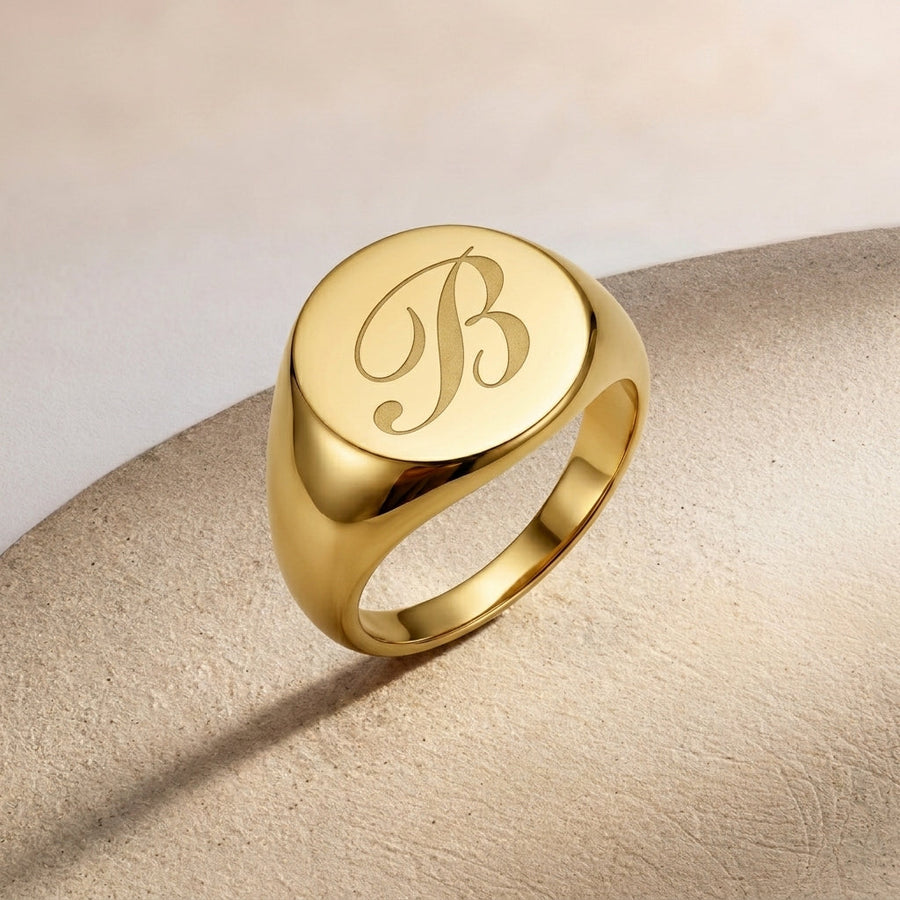
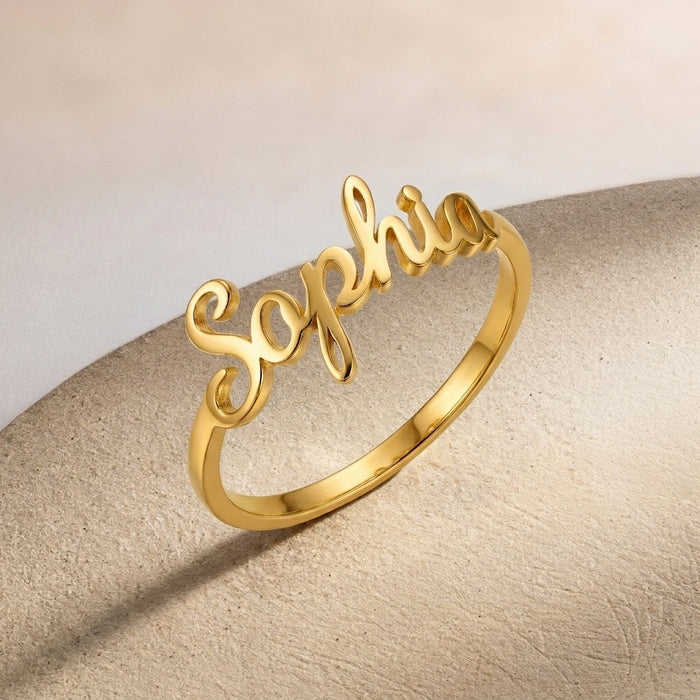
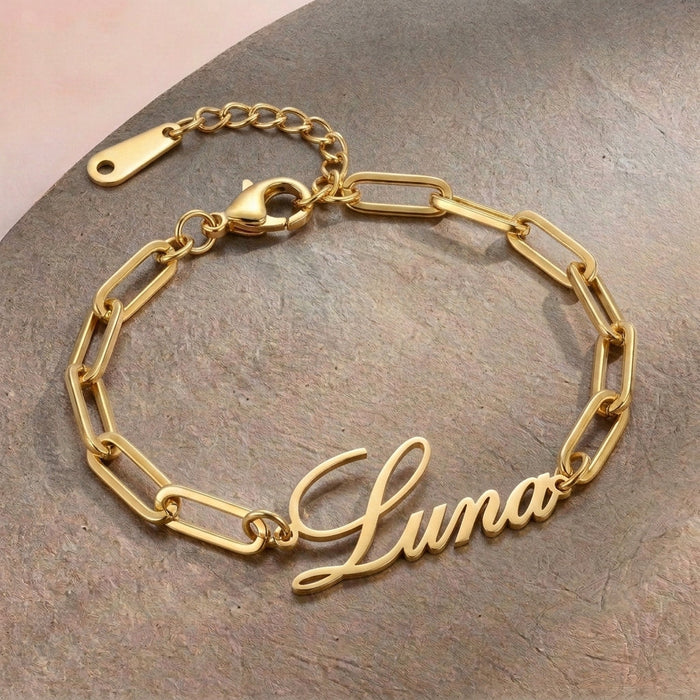
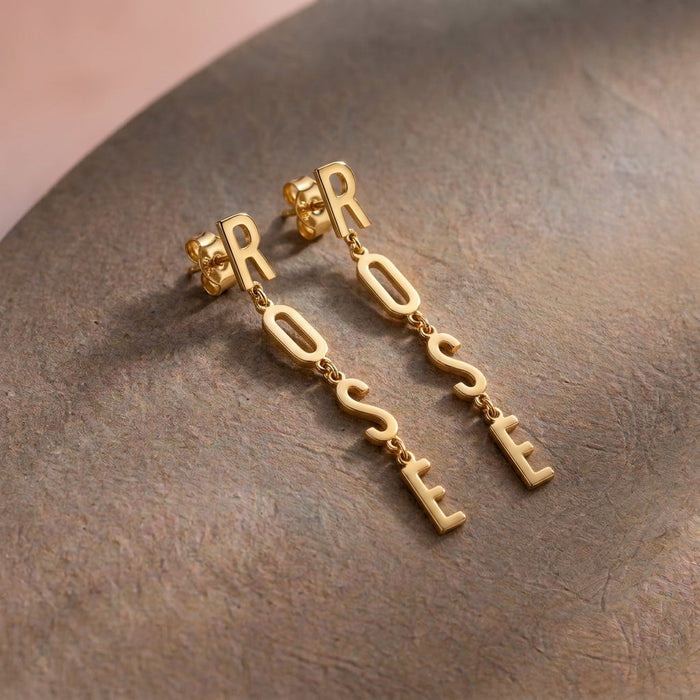
All NALORA pieces are made of stainless steel, with gold, rose gold, steel, or black finishes depending on the models. The choice is not romantic, it is practical: it is the only material that ticks the three boxes that matter for an engraved piece of jewelry worn every day.
- It does not tarnish or turn the skin green.
- It can be kept on in the shower and at the pool.
- It holds a clear engraving over time.
A personalized piece of jewelry that you have to remove before each shower ends up in a drawer. The one you keep is the one you forget to remove.
In summary
- 316L Steel: resistant, no particular maintenance, impervious to water. The best lifespan-to-price ratio for an engraved piece.
- Gold plated: the appearance of gold, a lifespan that depends entirely on a thickness rarely announced.
- 925 Silver: noble and pleasant, but it tarnishes and deforms faster on thin pieces.
Last piece of advice, valid whatever the material: beware of vague mentions. A seller who knows their product can say what it is made of.
Jewelry from this guide
Best Sellers
A question about an engraving?
Write to us or contact us via WhatsApp: someone from the workshop will reply within 24 hours.